
Your Ultimate Happiness Toolkit
The Happiness Hacks: Staying Present in a Distracted World

Remember chasing after the ice cream vendor's cart on scorching summer days? The aroma of mango or kulfi would waft through the air, a promise of pure, sweet bliss. We'd race him down the dusty street, pockets weighed down with hopes of cold, creamy reward. But by the time we reached him, panting and desperate, the vendor would often be turning a corner, leaving us with just the fading scent and a yearning in our bellies. Happiness, it seemed, was a lot like chasing the ice cream cart – always a delicious chase, but never quite captured.
Growing up, the fireflies transformed into fancy houses, dream jobs, and overflowing trophy cases. We were bombarded with messages: "This is what happiness looks like!" But a nagging doubt lingered. Why did getting an A+ feel incredible one day, then meaningless the next? Why did the new bike lose its shine after a week?
We were sold a faulty equation: unhappiness + achievement = happiness. But this only fueled an endless cycle of fixing, striving, and never quite arriving.
Got a bad grade? The answer was simple: study harder, fix the bad grade, then happiness would unlock.
Didn't like your reflection in the mirror? Fix your body, they said, and happiness would follow.
Looking around, everyone seemed to be winning at this game. They had the things, the grades, the perfect lives plastered on social media. But somewhere along the way, the joy faded. Fixing things for happiness became a never-ending chore. The more you chased it, the further it seemed to run.
Here's the truth they forget to tell you: happiness isn't a prize at the end of a race. It's not something you fix or acquire.
I write this newsletter a bit differently, where I will present the research that has been done in the world of science, but will let you find the answer on “how to be happy” yourself. (as again, everything is highly individualistic).
In this newsletter, we'll delve into the complex and nuanced nature of happiness, exploring the following themes:
Happiness according to the Harvard Happiness Project.
The relationship between happiness and money, with insights from Yale happiness research.
The impact of a wandering mind on happiness.
The idea that true happiness comes from within.
Aligning actions with personal values to achieve lasting contentment.
We'll unpack the wisdom from experts in the field and share practical insights to help you cultivate lasting happiness in your life.
Hedonia and Eudomenia - Pleasure vs Meaning
Emiliana Simon-Thomas further breaks down happiness into hedonic (positive emotional experiences in favorable circumstances) and eudaimonic (feeling that life is meaningful and purposeful) dimensions.
Hedonia is the instant gratification trap - delicious meals, fancy gadgets, the thrill of buying. It fades fast, leaving you chasing the next high.
I was I believe a complete hedonist. Chasing goal after goal after goal without realising that I was just moving the goal post every single time.
Eudaimonia takes a different path. It's about living a meaningful life, using your talents and passions for something bigger. Helping others, raising children – these may not be instant fun, but they bring lasting fulfillment.
Both are important. Hedonia adds spice, while eudaimonia provides direction.
While eudaimonic pursuits may sometimes require short-term sacrifice and effort, the long-term benefits of nurturing this dimension are profound. Numerous studies link higher levels of eudaimonic living to better health, greater resilience against adversity, stronger social bonds, and increased longevity.
My eudaimonic pursuit at the moment? This newsletter! (and I hope it helps) :)
Before you go further, have a quick thought on if this is true. And how this plays a role in your life.
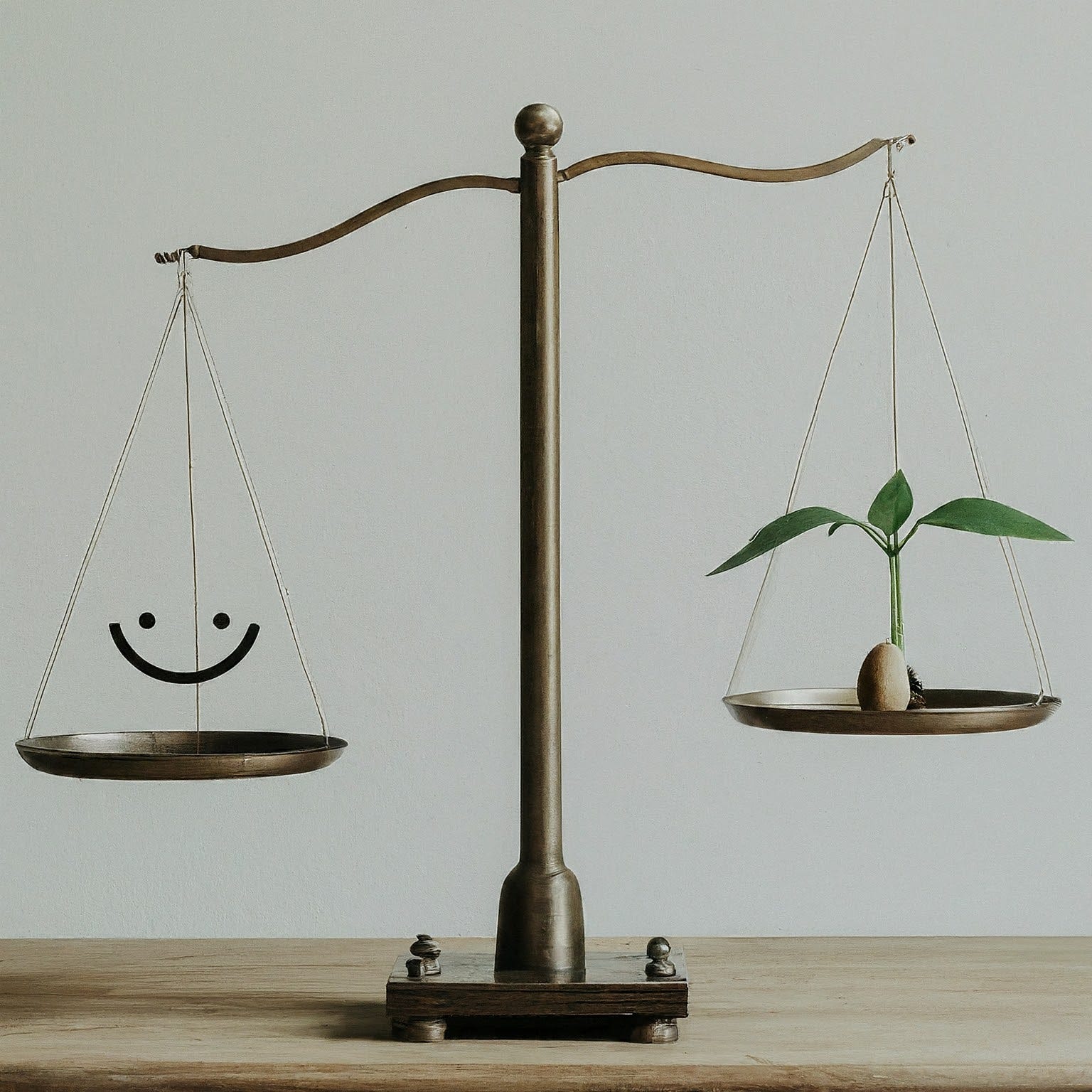
Happiness Based on the Harvard Happiness Project
The Harvard Happiness Project, one of the longest-running studies on happiness, provides valuable insights into what truly makes people happy. Over several decades, researchers tracked the lives of hundreds of participants, examining various aspects of their well-being.
The study revealed the following key points which are obvious but still worth highlighting
Strong Relationships Are Key to Happiness
The study revealed that people with happy marriages in their 80s reported better mental health even on days with physical pain.
The study found that loneliness has a significant negative impact on health, comparable to smoking and alcoholism.
Relationship Satisfaction at 50  |  Health at 80
  -------------------------------|-------------------
 High Satisfaction               |  Better Health
 Medium Satisfaction             |  Average Health
 Low Satisfaction                |  Poor Health

Marital Satisfaction  |  Mental Health
 ---------------------|-------------------
Happy Marriage        |  Better Mental Health
Unhappy Marriage      |  Poorer Mental Health
Quite straightforward right? But this will set the tone for the rest of the newsletter.

Happiness and Money: Can Money buy happiness?
Daydream with me for a second. Imagine waking up every morning to the rhythm of waves lapping at the shore in Goa. A million bucks sits in your bank account, promising endless sunshine and the best food money can buy. Sounds like happiness, right?
Wrong.
In my own life, I see that money has greatly improved my happiness. I was a broke college kid who barely had enough money to buy a masala puri.
But after a while, I kind of just got used to it. Money buffers a lot of my stress, helps me in a lot of ways. In a simple way “ More money more problems, less money even more problems”. ( I will have a T-shirt of this printed someday).
Money buys you the security for a good life. Not happiness.
Why? Because the real currency of happiness isn't dollars, it's experiences.
Think about it – your best memories are probably adventures, shared moments, or learning something new.
Researchers, including Robert Waldinger, highlight differences in how people use discretionary income:
Experiences: Spending on experiences tends to create lasting happiness due to positive memories and social connections forged during these events.
Possessions: Buying material goods often leads to temporary satisfaction, which may diminish quickly due to comparison with others
So, the next time you think money equals happiness, remember this: it's the experiences you buy, not the things, that hold the key to unlocking lasting joy. It's about collecting moments, not monuments.

A Wandering Mind is an Unhappy Mind
Ever notice your mind goes on wild adventures while you're supposed to be doing something else? Like, one minute you're writing code, the next you're daydreaming about your million-dollar AI startup idea, then BAM! Reality hits and you remember those unpaid bills. Yeah, been there
One of my favorite research by psychologists Matthew Killingsworth and Daniel Gilbert highlights another key aspect of happiness: the impact of a wandering mind.
Their study, "A Wandering Mind is an Unhappy Mind," found that people spend nearly 50% of their waking hours thinking about something other than what they are currently doing, and this mind-wandering is often linked to unhappiness.
The study found that:
People are thinking about what is not happening almost as often as they are thinking about what is
Doing so typically makes people unhappy
Regardless of the content of their thoughts - pleasant, unpleasant, or neutral—people reported lower levels of happiness when their minds were wandering compared to when they were focused on their current activity.

This hits home for folks with ADHD, myself included. It's a constant battle to focus! But here's the good news: the study also shows that being "in the zone" – totally focused on what you're doing – makes you happier
I see the study being applied in my own life. Think about it: that feeling of being completely absorbed in building a website, crushing a new project, or even just cleaning your room – that's the happy zone.
So, what does this mean for us regular folks? Mindfulness, my friend! By training our brains to stay present (fancy way of saying "stop getting distracted"), we can boost our happiness and overall well-being.
True Happiness Comes from Within
Remember Dr. K, the psychiatrist who seems to have it all figured out now? Believe it or not, there was a time before the fancy title and helping others – a time of low grades, depression, video game addiction, and relying on his girlfriend to make ends meet. So, what's his secret sauce?
Turns out, Dr. K (aka Dr. Kanojia) cracked the happiness code by realizing it has nothing to do with external stuff. Forget the GPA trophies and fancy cars – that happiness high is fleeting. His turning point came at an Indian monastery, where he discovered true happiness lives within.
So does that mean all of us need to join an ashram? No. (unless you want to)
Here's the thing: many of us believe achievements and possessions are happiness shortcuts. We chase goals like rabbits after carrots, thinking that "once I get X, then I'll be happy." But Dr. K says that's a recipe for disappointment. Real joy comes from taking responsibility for your own well-being. It's about understanding that happiness is an inside job, fueled by your own thoughts and reactions, not some external prize.
Imagine happiness as a delicious apple. The apple itself doesn't create the enjoyment – it's the experience of tasting it that brings the joy. Same goes for life. What truly matters isn't what happens to you, but how you choose to see it and react to it. It's all about perspective, folks!
Dr. K also stresses the power of detachment. We can't control everything, but we can control how we approach it. By focusing on self-improvement and letting go of a white-knuckled grip on outcomes, we become more authentic and attract genuine connections.
Finally, Dr. K throws shade at our tech-obsessed world. . By constantly seeking distractions, people move away from processing their emotions, which worsens their ability to handle life's ups and downs. This avoidance prevents genuine happiness and emotional growth.

Impact of Generosity on Happiness
Before I close the newsletter, being the frugal person I am, I still would like to talk about this final bit of research by Elizabeth Dunn.
Dunn's study, which involved giving $5 and $20 bills to participants with instructions to spend the money on themselves or others, showed that people felt happier when they spent money on others.
This effect was robust across various studies and samples, confirming that prosocial spending—using money to benefit others—generally increases happiness
Imagine you get a surprise bonus at work. Instead of splurging on a new gadget, you treat your friend to a long-awaited dinner or donate to a cause you care about.
Dunn's studies found that this kind of "prosocial spending" leads to a greater boost in happiness than buying something for yourself. It seems the act of giving and seeing the positive impact it has on others brings us more joy than material possessions ever could. So, next time you're looking for a happiness boost, skip the shopping spree and consider spreading the joy instead! (don’t ask me for money).

In this journey through understanding happiness, we've explored the following hacks:
Misconceptions of Happiness: Chasing external achievements often leaves us empty-handed.
Harvard Happiness Project: Strong relationships are fundamental to lasting happiness.
Money and Happiness: Wealth improves security, but true joy comes from experiences and giving.
Mind-Wandering: Staying present enhances our happiness.
Internal Happiness: Real happiness is found within, through self-awareness and responsibility.
Generosity: Giving to others brings more joy than spending on ourselves.
Happiness is not a finish line but a path we walk daily. Each of us has a unique journey to discover Your blend of hedonic and eudaimonic happiness.
Ready to embark on your happiness quest? We've got a toolkit packed with exercises and activities designed to help you explore different paths to happiness.
Check it out and let us know what works for you! Share your experiences and reflections in the comments below – together, we can learn and grow on this journey to happiness.
Weekly Quest
Here are the Weekly Quests for Happiness:
Self-Reflection and Values Quest:
Complete the Values Clarification Worksheet to identify your core values.
Schedule 3 activities this week that align with your top values.
Gratitude Quest:
Keep a Gratitude Journal, writing down 3 things you're grateful for each day.
Review your journal entries from last week and reflect on the positive impact.
Balanced Activities Quest:
Use the Balanced Activity Planner to schedule a mix of pleasurable (hedonic) and meaningful (eudaimonic) activities for the upcoming week.
Examples: a fun hobby, quality time with loved ones, volunteering.
Mindfulness Quest:
Practice mindfulness meditation for 10-20 minutes per day. Use an app if needed.
Be mindful during daily activities like eating a meal or taking a walk.
Social Connection Quest:
Using the Social Connection Planner, schedule a get-together or catch-up with an important person in your life.
Attend a community event or group to build new connections.
Kindness Quest:
From the Acts of Kindness Checklist, perform at least 1 act of kindness this week.
Reflect on how it made you feel and its potential impact.
Desire vs Value Quest:
When you have a desire this week, pause and assess if it aligns with your core values using the tool.
Prioritize desires that contribute to lasting well-being.
ACT Quest:
Write down 1-2 of your key values.
Practice acceptance of difficult emotions through mindfulness when they arise.
Take an action this week committed to living by your stated values.
Resources
https://bigthink.com/the-learning-curve/mind-wandering/
https://www.semanticscholar.org/paper/A-Wandering-Mind-Is-an-Unhappy-Mind-Killingsworth-Gilbert/4ea5f2ec8e68e476035d3865958e2f22b2520d38
https://www.ncbi.nlm.nih.gov/pmc/articles/PMC8466735/
https://www.servantsuniversity.com/synthetic-happiness-vs-natural-happiness/
Beautiful read!